
Self-irrigating basins: How do they work and are they worth buying?
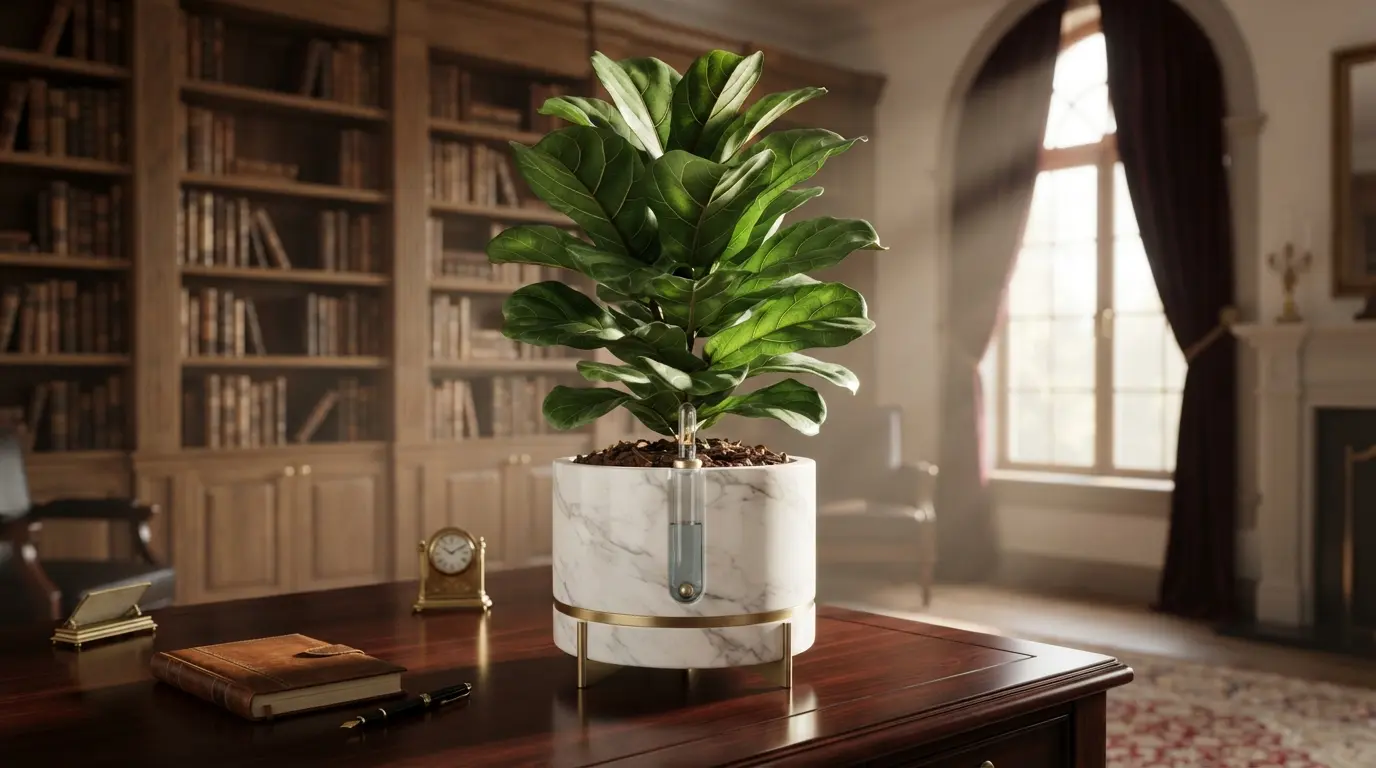
Self-watering planters have become a popular choice among plant lovers, especially those who want to reduce the need for frequent watering and maintain a relatively constant level of soil moisture. These planters combine the traditional shape of plant pots with an internal system that helps the plant gradually obtain water as needed.
But how do self-watering pots work? Are they really suitable for all plants? And are they worth the cost compared to regular pots? In this article, we review how they work, their main advantages and disadvantages, and the situations in which they are a good choice.
What are self-irrigating basins?
Self-irrigating pots are planting containers that typically contain a water reservoir at the bottom, with a system that allows water to gradually transfer from the reservoir to the soil.
Instead of watering the plant from above daily or every few days, the reservoir is filled with water, and then the soil slowly benefits from it through capillary action or by means of wicks designed to transfer moisture.
The aim of this design is to provide a consistent amount of water around the plant roots while reducing the need for constant intervention in the irrigation process.
How do self-irrigating basins work?
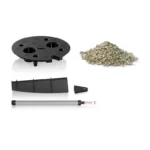
Most self-irrigating basins rely on three basic parts: the planting basin, the water reservoir, and a means of transferring water to the soil.
The plant and soil are placed in the upper part, while the water reservoir is located below the basin. The soil is connected to the reservoir through a section that allows it to gradually draw water as it begins to dry out.
This process relies on the movement of water through the tiny pores in the soil or wicks, so that moisture moves from the wetter area to the drier area.
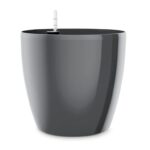
Many of these tanks also contain a water level indicator, which helps the user know when it is appropriate to refill the tank.
What is the difference between a self-irrigating basin and a regular basin?
In a normal basin, water is poured directly onto the soil, then the water is distributed inside it and the excess comes out through the drainage holes.
In a self-irrigating basin, part of the water remains inside a separate tank and gradually reaches the soil.
This difference makes self-irrigating basins more capable of retaining water for a long time, while traditional basins give the user direct control over the timing and amount of irrigation.
Key advantages of self-irrigating basins
Self-irrigating basins offer a number of advantages that make them attractive for use inside the home, office, or balcony.
Reduce the number of irrigations
One of its main advantages is that it reduces the need for constant watering. Instead of checking the soil every day or two, the reservoir can be filled and the plant allowed to receive water gradually.
The length of time that water can remain inside the tank varies depending on the size of the tank, the type of plant, the temperature, the humidity, and the plant’s rate of water consumption.
Maintaining a more stable level of humidity
Traditional irrigation can lead to significant changes in soil moisture between waterings. The soil may be very wet immediately after watering, then dry before the next watering.
Self-irrigation systems help to reduce these fluctuations, which can be beneficial for plants that prefer stable humidity.
Suitable for busy people
If you sometimes forget to water your plants or spend long periods away from home, these planters may be more practical than traditional planters.
It can also be suitable for offices and places where plants are not cared for on a daily basis.
Reducing water waste
Because the water is stored inside the basin and used gradually, water loss caused by large amounts coming out of the drain holes may be reduced.
Irrigation from below also helps to get water directly to the area where the roots need it.
Keeping the place clean
In indoor plants, overwatering may cause water to overflow from the saucer under the sink or spill onto floors and furniture.
Self-irrigating basins usually reduce this problem because they have a dedicated water reservoir.
Disadvantages of self-irrigating basins
Despite their benefits, these basins are not ideal in all cases.
Higher price compared to traditional basins
Self-watering basins are usually more expensive than simple plastic or ceramic basins, due to their internal design, reservoir, and water level indicator in some models.
However, the additional cost may be justified for those seeking convenience and a reduced frequency of irrigation.
Not suitable for all plants
Some plants prefer the soil to dry out considerably between waterings. Therefore, prolonged periods of moisture may not be suitable for them.
Cacti and some types of succulents, for example, usually need fast-draining soil and periods of drought, and therefore self-irrigating systems should be used with them with caution.
Probability of increased humidity
If the reservoir is continuously filled without allowing the soil to dry out adequately, the environment around the roots may become excessively wet.
This may increase the likelihood of problems such as root rot, especially if the soil is heavy or poorly aerated.
The need for cleaning
Salts or sediment may accumulate inside the water tank over time, especially when using water with a high mineral content or when fertilizers are added.
Therefore, the tank and irrigation system need to be cleaned from time to time.
What plants are suitable for self-irrigating basins?
These basins are most useful with plants that like relatively regular humidity.
Examples of plants that can benefit from this include some indoor leafy plants, herbs, and some ornamental plants that do not prefer the soil to dry out completely.
It can also be used with some potted vegetables, especially plants that need regular amounts of water during growth.
However, it is always necessary to consider the needs of each plant separately, because the appropriate watering method varies from one type to another.
Are self-watering pots suitable for indoor plants?
Self-watering basins are particularly suitable for houseplants, as they reduce the need to carry plants to drainage areas or deal with runoff water after each watering.
Also, having a water level indicator in some basins makes monitoring irrigation easier.
They can be a good choice for plants placed in living rooms, offices, or places where frequent watering is difficult.
Can it be used in the garden or on the balcony?
Yes, self-irrigating basins can be used in outdoor spaces, but they are affected by factors such as heat, sunlight, and rain.
In hot weather, the plant may consume the water in the reservoir more quickly, so its level should be checked regularly.
In areas that experience heavy rainfall, it is important to ensure that there is a system in place to drain excess water so that the basin does not become overfilled.
How to use a self-irrigating basin correctly
For best results, it is important to use suitable soil that allows moisture to pass through while maintaining good aeration for the roots.
After planting, it may be beneficial to water the soil from above initially until the roots are established and the soil is evenly moist. Afterward, watering can be gradually increased using a watering can.
The tank should not be automatically refilled once the water level drops slightly. In some cases, it is best to allow a short period for the moisture level to decrease before refilling.
Do self-irrigating basins need drainage holes?
This depends on the design of the aquarium. Good types usually have a mechanism that allows excess water to escape so that the water level does not rise excessively to the root area.
This feature is very important, especially when using the sink outdoors where rainwater can enter the system.
Therefore, it is best to make sure there is a suitable way to drain excess water before purchasing the sink.
Can fertilizer be placed in the water tank?
Fertilizers can be used with some self-irrigating systems, but the manufacturer’s instructions and the fertilizer instructions must be followed.
These systems require caution when fertilizing because salts can accumulate inside the soil or reservoir over time.
Therefore, it may be beneficial to wash the soil with water from above from time to time if it is suitable for the plant, to help get rid of accumulated salts.
How to choose a good self-irrigating basin?
When purchasing a self-watering basin, one should not only focus on the external appearance, but also examine how the internal system works.
It is preferable to choose a basin that has a tank with a capacity appropriate to the size of the plant, a clear water level indicator, and a good system for draining excess water.
The tank should also be easy to access and clean, as complex designs can make maintenance more difficult.
It is also important to choose a size that is proportionate to the plant’s roots, rather than buying a very large pot just because it has a larger water tank.
Common mistakes when using self-irrigating basins
One of the most common mistakes is the belief that having a self-watering system means that the plant does not need any monitoring.
It is essential to continuously monitor leaf health, soil condition, and water level. The application method should also be adjusted according to the season, as the plant’s water consumption may be high in summer and low in winter.
Other mistakes include constantly filling the tank without breaks, using heavy soil that retains large amounts of water, or choosing this type of basin for a plant that needs to dry out between waterings.
Is it possible to make a self-watering basin at home?
A simple self-irrigating system can be created using a container with a bottom reservoir and a wick that absorbs water and transfers it to the soil.
There are several home designs that can be implemented using nesting containers or plastic bottles, but the success of the system depends on the balance between the amount of water and the speed at which it is transferred to the soil.
Therefore, the system should be tested and the soil moisture level monitored instead of relying on it directly for long periods.
Are self-irrigating basins suitable while traveling?
They can be very useful when traveling for short or medium periods, as they provide the plant with a continuous source of water.
However, the length of time the system can operate without intervention depends on the size of the tank, the size of the plant, and the temperature.
Therefore, it is preferable to test the tank’s consumption time before traveling, rather than relying solely on the duration written on the product.
Are self-irrigating basins worth buying?
The answer depends on your needs and the type of plants you grow.
If you have a large number of plants that need regular moisture, or you forget to water, or spend a lot of time outside the home, self-watering planters may be a practical and convenient investment.
However, if you grow drought-tolerant plants or prefer to monitor and manually water each plant, you may not need to pay extra for this type of basin.
In other words, the value of a self-watering basin depends not only on its price, but also on how well it suits the plant and how you take care of it.
Conclusion
Self-watering basins offer a practical way to regulate plant watering and reduce the need for daily monitoring by storing water and releasing it to the soil gradually. They are particularly suitable for plants that prefer consistent moisture and for those seeking a simpler solution for managing irrigation.
However, it is not a complete substitute for proper plant care. Choosing the right soil, monitoring moisture levels, cleaning the container, and understanding the plant’s needs remain essential for its success.
Therefore, if your plants are suited to this type of watering and you want to reduce the frequency of watering, self-watering pots may be worth purchasing. For plants that require dry soil most of the time, a traditional, well-draining pot may be a better option.
قد تعجبك
Choosing the right pot size isn’t just about aesthetics; it’s a crucial factor that directly impacts plant health, root growth, […]
Plant pots are essential elements that influence plant health and the aesthetics of both indoor and outdoor spaces. Choosing the […]
Self-watering planters have become a popular choice among plant lovers, especially those who want to reduce the need for frequent […]