
How do you choose the right planting pot size for each plant?
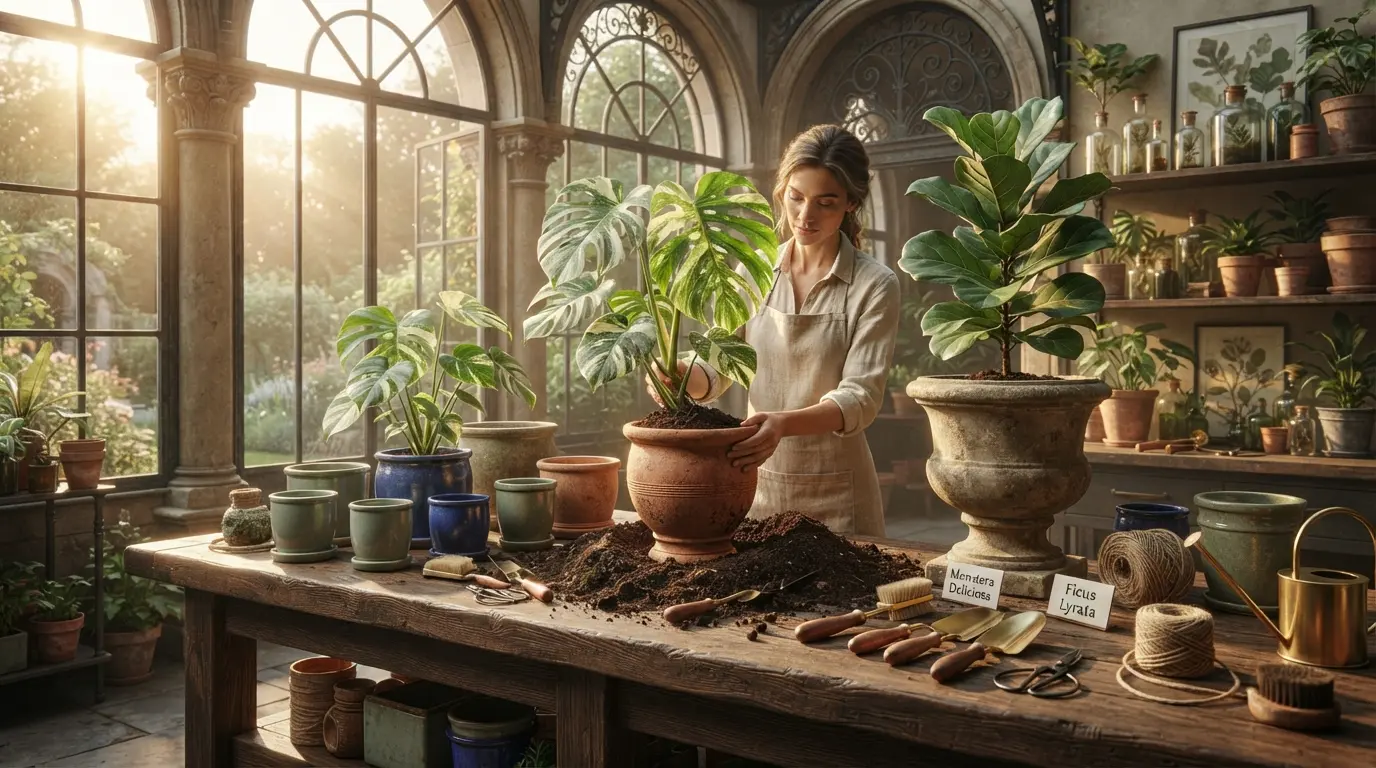
Choosing the right pot size isn’t just about aesthetics; it’s a crucial factor that directly impacts plant health, root growth, and the ability to absorb water and nutrients. A pot that’s too small can restrict root movement and slow growth, while a pot that’s too large can cause the soil to retain excess water and increase the risk of root rot.
Therefore, knowing the appropriate size for each plant helps provide a balanced growing environment, whether you’re growing plants indoors, on a balcony, or in the garden. This guide outlines the most important factors that will help you choose the right planter size in a practical way.
Why is the size of the planting basin important?
Plant roots need enough space to spread and grow. As the plant grows, the roots expand in search of water and nutrients, and if they don’t find enough space, they may begin to twine around themselves inside the pot.
The size of the pot also affects the amount of soil around the roots, and therefore the amount of water the soil can retain. A balance between plant size and pot size helps provide adequate moisture without the soil remaining waterlogged for extended periods.
The right pot also helps to stabilize the plant, especially tall or large-leaved species that need a stable base.
How do you know if the pot is too small for the plant?
There are a number of signs that may indicate that the plant needs a larger pot.
One of the most prominent signs is the emergence of roots from the drainage holes at the bottom of the basin, or the roots wrapping densely around the soil mass when the plant is removed from the container.
You may also notice that the soil dries out very quickly after watering, because the roots have taken up most of the basin space and there is no longer enough soil to retain moisture.
Other signs include slow growth, a tendency for the plant to fall over because its size is not suitable for the pot, or the need for more frequent watering than usual.
Should a much larger pot be chosen when transplanting the plant?
A common mistake is to transfer a small plant directly into a very large pot in the hope of giving it room to grow for many years.
However, this can cause a problem, as the large amount of soil around the small roots may retain water for longer than the plant can absorb it. Continued excess moisture can increase the likelihood of root rot.
Therefore, it is usually preferable to gradually move to a basin that is only a few centimeters larger in diameter than the current one, taking into account the type of plant and the rate of root growth.
How do you choose the right pot size for small plants?
Young plants do not need large pots when they first start growing. Seedlings, herbs, and some small houseplants can be started in small pots and then transferred to larger ones when the roots begin to fill the available space.
A suitable small container helps to better control soil moisture and makes it easier to monitor the plant’s water needs.
It is important to make sure that the sink has sufficient drainage holes, regardless of its size.
The appropriate pot size for medium-sized houseplants
Medium-sized indoor plants, such as some types of leafy plants, usually need pots that provide enough space for the roots while maintaining a balance between the soil and the plant.
If the plant is already in a suitable pot and its roots are starting to crowd out, it is best to choose a new pot that is slightly larger in diameter than the previous one.
There is no single rule that applies to all plants, because the rate of root growth varies from one species to another.
Pot size for large plants
Large plants need deeper and wider pots, especially if they have long stems or large leaves.
A large basin helps to stabilize the plant and give it adequate space for root growth, but the weight of the basin after adding soil and water must also be taken into account.
For large plants placed indoors, a movable base can be used under the sink to make it easier to move when cleaning or changing its location.
Choose the pot according to root depth
The diameter of the basin is not the only important factor; attention must also be paid to its depth.
Some plants have shallow roots that spread horizontally, and therefore can grow well in wide, relatively shallow basins.
Conversely, plants with long or deep roots need deeper pots so that the roots can grow normally.
For this reason, the shape of the root system should be one of the most important factors to consider when choosing a basin.
The appropriate pot size for cacti and succulents
Many types of cacti and succulents have limited roots compared to the size of the visible part of the plant, and therefore do not usually need huge pots.
It is preferable to use a basin that closely matches the size of the roots, with fast-draining soil and good drainage holes.
Using a container that is too large for succulents may cause the soil to remain wet for too long, which may cause root problems.
The appropriate size of the basin for herbs
Herbs such as basil, mint, parsley and coriander can be grown in medium-sized pots, but their needs vary depending on the nature of their growth.
Some herbs spread quickly and may need more space over time, while other types can be grown in relatively small containers.
If you wish to grow more than one type of plant in a single container, you must provide sufficient space between the plants so that the roots do not compete for water and nutrients.
Choosing the right size pot for vegetables
Vegetables grown in pots usually need more space than small houseplants, because many of them grow quickly and consume large amounts of water and nutrients.
Tomatoes, peppers and eggplants, for example, need separate pots of a good size that allow for the formation of a strong root system.
Leafy vegetables such as lettuce and arugula can be grown in relatively shallower beds, provided that adequate space is provided between each plant.
What about plants with large roots?
Some plants grow their roots very quickly, and therefore need wider or deeper pots than others.
If the plant is known for rapid growth, it is best to choose a pot that gives it moderate extra space without being oversized.
It should also be monitored periodically because some species may need to have their tank changed more frequently than slow-growing plants.
Does the size of the pot affect the rate of plant growth?
Yes, the size of the basin can affect plant growth.
When the roots become too crowded, the growth of the upper part of the plant may slow down due to limited space and resources.
Conversely, a very large pot does not necessarily mean the plant will grow faster. If the excessive size causes the soil to retain water for extended periods, the roots may be damaged and the plant will weaken instead of growing.
So, the goal is to provide a suitable space, not the largest possible space.
When should the plant pot be changed?
The timing of changing the pot depends on the plant’s growth rate and type.
The need for repotting usually arises when the pot space becomes filled with roots, the roots become twisted around themselves, or when the plant begins to dry out more rapidly than before.
The plant may also need to be moved if its size becomes disproportionate to the pot and it becomes unstable.
It is preferable to examine the roots before making a decision, rather than relying solely on the size of the leaves or the height of the plant.
The best way to transfer the plant to a larger pot
When moving the plant, it is preferable to choose a pot that is slightly larger than the current one.
The plant should be gently removed without damaging the roots, and then part of the old soil should be removed if it is hardened or deteriorated.
Next, a layer of new soil is placed in the basin, then the plant is placed in the middle and the spaces around the roots are filled in.
It is important not to bury the plant stem deeper than it was in the previous basin unless the type of plant allows it.
Is it possible to grow more than one plant in a single pot?
Yes, but the size of the basin should be chosen based on the final number of plants and not just on the initial size of each seedling.
Sufficient space should be provided for each plant to grow without the roots becoming excessively intertwined.
It is also preferable to group plants that have similar needs for water, light, and soil within the same aquarium.
Planting a moisture-loving plant alongside a drought-loving plant can make watering difficult, even if the size of the pot is appropriate.
Deep or wide pelvis: which is better?
That depends on the plant.
A deep basin is suitable for plants with roots that extend downwards, while a wide basin is better for plants with shallow roots or plants that spread laterally.
Therefore, one should not rely solely on the amount of soil or the capacity of the basin, but should also consider the shape and dimensions of the basin.
The importance of drainage openings with varying basin sizes
No matter how suitable the size of the basin is, cultivation can fail if there is no good drainage of water.
The basins should have openings that allow excess water to escape after irrigation.
Drainage is more important in large basins, because a larger amount of soil can retain water for a longer period.
It is also important to ensure that the drainage openings do not become clogged over time.
How does soil type affect the choice of pond size?
The type of soil affects the amount of water the pond holds.
Heavy soil may remain wet for a longer period, therefore using a very large basin with it is more dangerous.
Light, well-aerated, and well-draining mixes allow water to drain out faster and provide a better environment for roots in many plants grown inside basins.
Therefore, the size of the pond and the type of soil should be viewed as a single system rather than dealing with each element separately.
Common mistakes when choosing the size of a planting pot
A common mistake is choosing a pot based solely on the plant’s external appearance without knowing the size of its roots.
Some people mistakenly believe that a larger basin is always better, while excessive size may cause irrigation problems.
Another mistake is keeping the plant in the same pot for many years despite the roots becoming crowded, or using a shallow pot for a plant that needs deep space.
Likewise, neglecting the drainage openings can render choosing the correct size useless.
Practical tips for choosing the right size
Before purchasing the pot, check the size of the plant and its root system if possible, and consider its expected growth rate over the coming period.
If you are moving the plant from one pot to another, choose a moderately larger size instead of moving to a huge pot.
If you are planting a new seedling, choose a pot that is appropriate to its current size, taking into account the amount of growth expected.
Don’t forget that the basin will become much heavier after adding soil and water, so ease of transport and placement should be taken into consideration.
Conclusion
Choosing the right planting container size depends on more than one factor, including root size, plant growth rate, soil type, irrigation needs, and root system shape.
A basin that is too small may restrict plant growth, while a basin that is too large may increase soil water retention and damage roots.
Therefore, the best approach is to choose a pot that provides ample space for growth while maintaining a balance between plant size and soil volume. By monitoring the roots and repotting the plant gradually as needed, a healthy environment can be provided, helping the plants grow stronger and more stable.
قد تعجبك
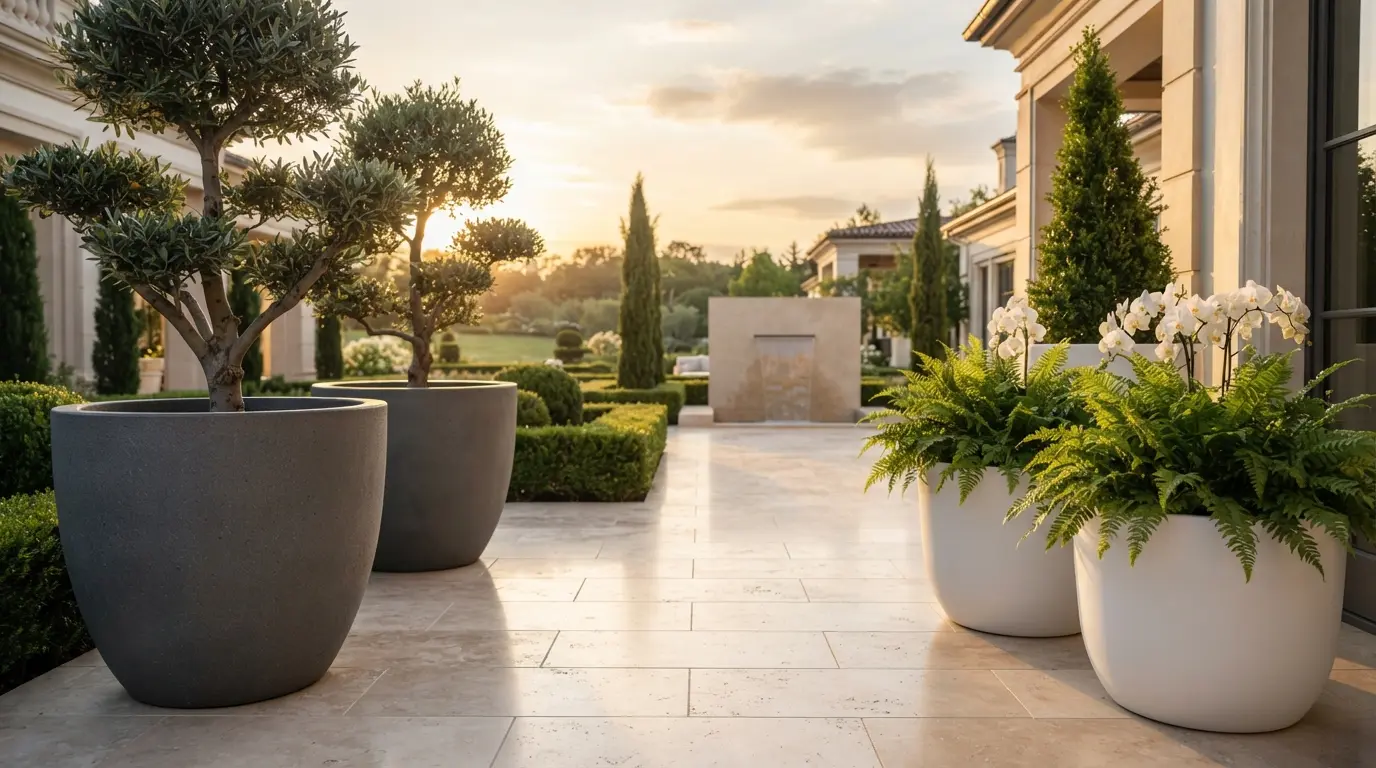
When landscaping a garden or balcony, choosing a planter isn’t just about shape and size; the material also plays a […]
Choosing the right pot size isn’t just about aesthetics; it’s a crucial factor that directly impacts plant health, root growth, […]
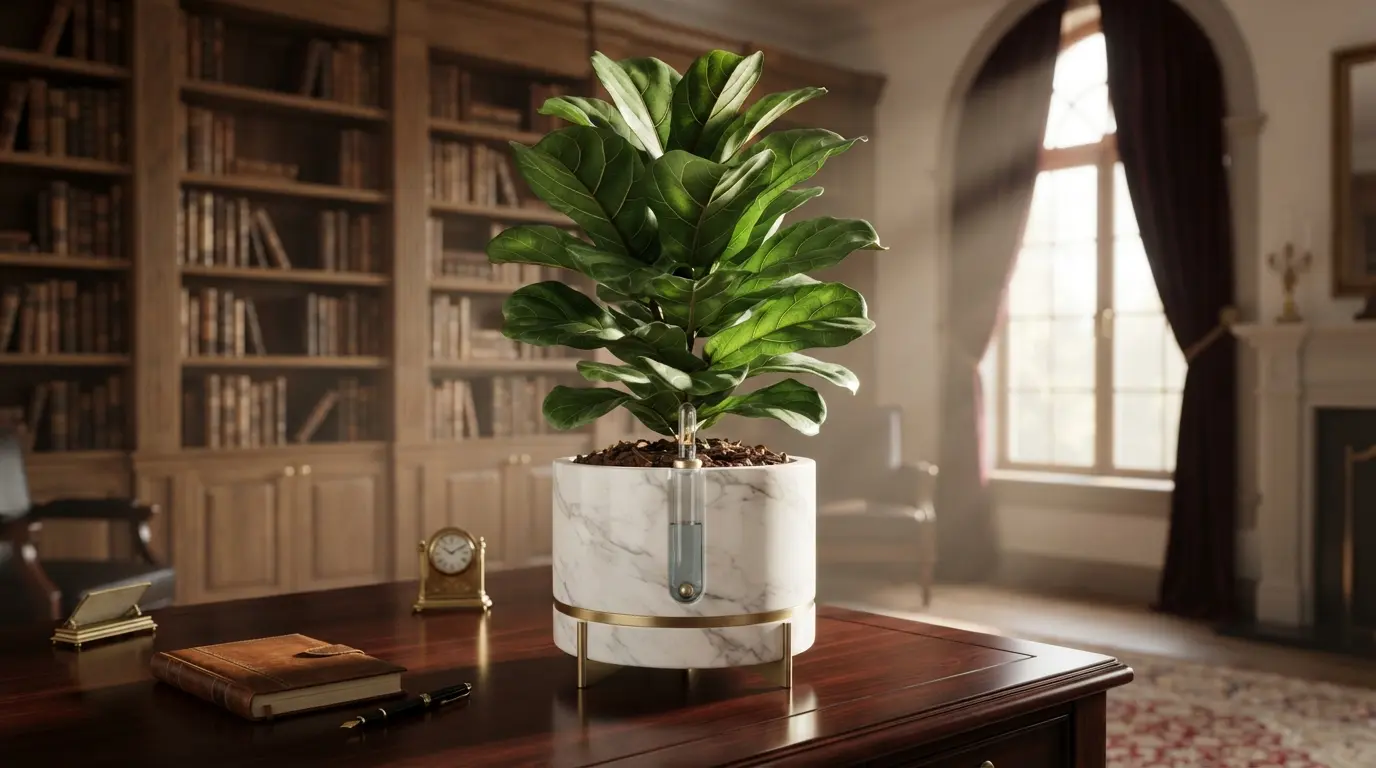
Self-watering planters have become a popular choice among plant lovers, especially those who want to reduce the need for frequent […]